
Maintain Comfortable Conditions for Customers and Staff
Commercial Cooling in Hampshire, Illinois for spaces where air conditioning failures disrupt business operations and tenant occupancy
Reliance Mechanical Heating & Cooling handles commercial cooling services in Hampshire, Illinois for retail stores, office buildings, restaurants, medical facilities, and industrial spaces where indoor temperature control directly affects revenue, employee performance, and equipment protection. You depend on rooftop units, split systems, or chiller-based cooling to keep interior spaces at temperatures that allow work to continue without heat-related slowdowns. When cooling equipment fails during summer months, the result is immediate: customers leave, employees lose focus, and temperature-sensitive inventory or equipment may sustain damage.
Commercial cooling systems require regular attention to refrigerant levels, condenser coil cleanliness, drain line function, and control calibration. A rooftop unit that runs continuously without lowering indoor temperature often has low refrigerant from a slow leak, dirty coils that prevent heat rejection, or compressor wear that reduces cooling capacity. Hampshire's humid summer conditions mean condensate drains must flow freely, or water backs up into drain pans and eventually leaks through ceiling tiles. Technicians check electrical contacts, measure amperage draw on compressors and fan motors, and verify that thermostats correctly signal cooling demand.
If your commercial space is not cooling properly or if you need seasonal maintenance scheduled, contact Reliance Mechanical Heating & Cooling to arrange a service appointment in Hampshire.
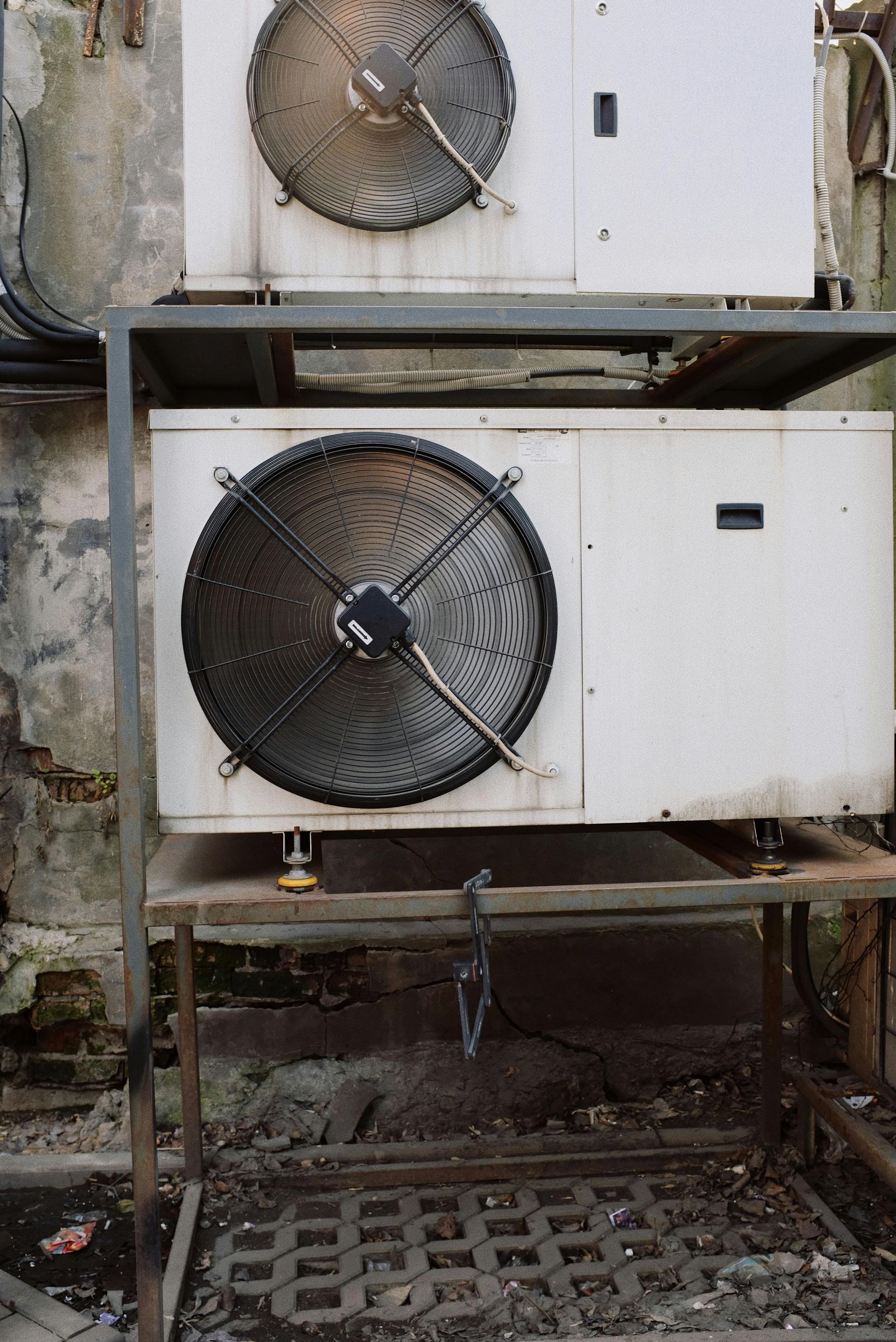
What Happens After Commercial Cooling Service
You will notice that indoor temperatures stabilize at setpoint levels and that humidity no longer builds to uncomfortable levels after a technician restores refrigerant charge, cleans condenser coils, and clears blocked condensate lines. A system that short-cycles or fails to dehumidify properly often needs adjustments to refrigerant flow, airflow settings, or expansion valve operation. Technicians use manifold gauges to measure suction and discharge pressures, compare readings to manufacturer specifications, and add or recover refrigerant as needed to restore rated capacity.
Reliance Mechanical Heating & Cooling also addresses airflow problems that prevent even cooling across multiple zones. Dirty blower wheels, closed or stuck dampers, and undersized return air grilles all reduce system effectiveness. After service, occupants in previously warm zones will feel cooler air, and the system will reach setpoint temperatures without running continuously.
Maintenance visits include inspecting fan belts, tightening electrical connections, testing capacitors, cleaning or replacing filters, and checking safety controls such as high-pressure cutouts. These services do not include ductwork installation, roof repairs, or electrical panel upgrades, which require separate trades.
Common Questions About Commercial Cooling Services
Business owners in Hampshire often want to understand what causes cooling failures and how to prevent disruptions during peak cooling months.
- What signs indicate a refrigerant leak in commercial cooling equipment? You may notice ice forming on refrigerant lines, reduced cooling output despite the system running constantly, hissing sounds near coil connections, or oily residue around fittings where refrigerant has escaped.
- How do technicians measure cooling system performance? Technicians use refrigerant gauges to check operating pressures, clamp meters to measure electrical draw, and thermometers to verify temperature split across evaporator coils, comparing all values to factory performance charts.
- When should commercial cooling systems receive maintenance? Scheduling maintenance in spring before cooling season begins allows technicians to address wear and component failures before hot weather increases demand on the system.
- Why does cooling capacity decrease over time? Dirt accumulation on condenser and evaporator coils reduces heat transfer, refrigerant leaks lower system charge, and compressor wear decreases the equipment's ability to move heat out of the building.
- What happens during a commercial cooling service call in Hampshire? Technicians inspect condenser and evaporator coils, measure refrigerant pressures and temperatures, test capacitors and contactors, verify thermostat operation, clean condensate drains, and check that safety controls respond correctly to abnormal conditions.
Reliance Mechanical Heating & Cooling serves commercial clients in Hampshire who need cooling systems inspected, repaired, or maintained to avoid downtime during busy periods. Call to discuss your cooling needs and set up a service visit that fits your building's schedule.